Your Food Career Doesn't Have to Start in a Kitchen
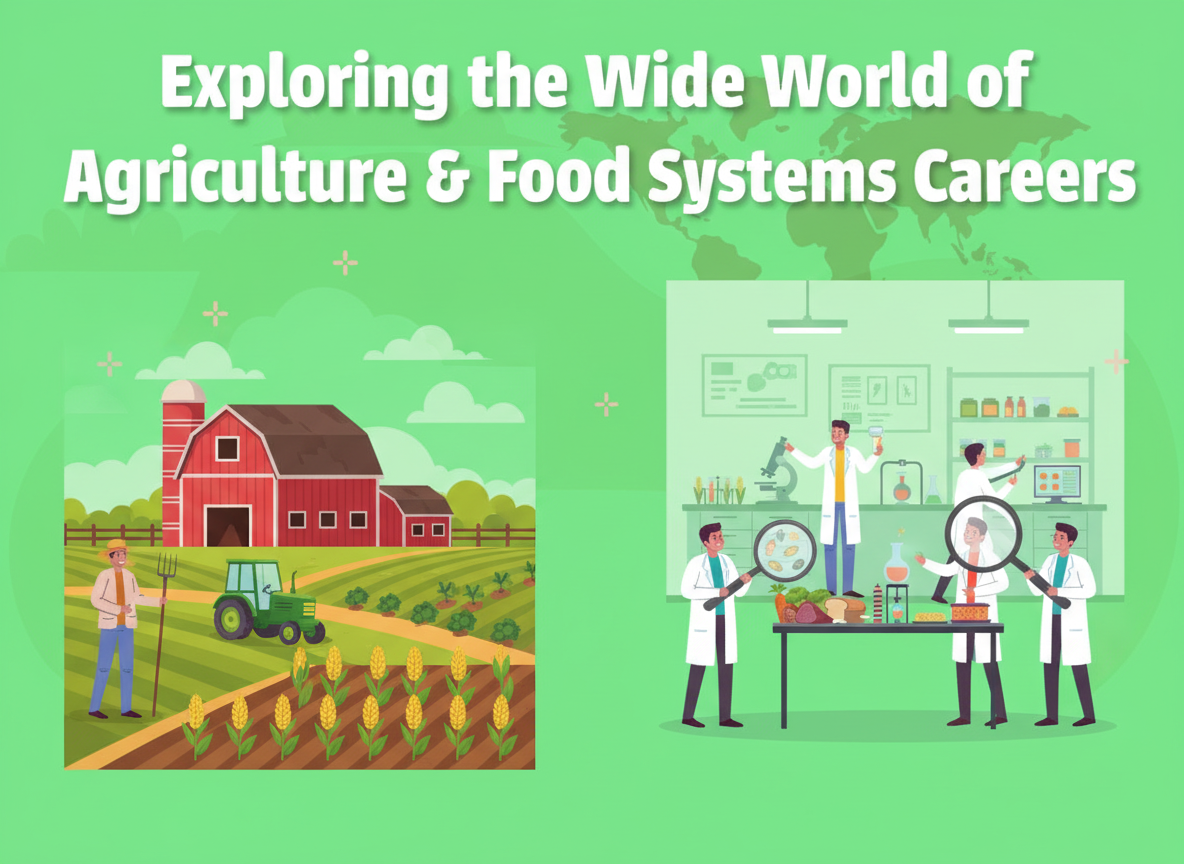
Exploring the Wide World of Agriculture & Food Systems Careers
When most people picture a career in food, they picture a chef. A kitchen. A restaurant.
But the food industry is one of the largest and most complex systems in the world, and the majority of the people who work in it never pick up a knife professionally. They work in labs, on farms, in logistics centers, at food companies, in government agencies, and at research institutions. They are the people who figure out how food gets grown, processed, tested, transported, and delivered safely to the people who need it.
If you're a student drawn to food, its science, its origins, its impact on communities and the environment, there is a career path here for you. And it may look nothing like what you expected.
Why Agriculture & Food Systems Matter Now More Than Ever
The global food system is under pressure. Climate change is reshaping what can be grown and where. Supply chain disruptions have exposed how fragile the path from farm to table can be. Consumer demand for transparency, sustainability, and equity in food production is growing fast.
The professionals who understand these systems, and who have the skills to work within them and improve them, are increasingly in demand. Food science, sustainable agriculture, supply chain management, and food technology are not niche fields. They are growth areas, and they need talented people.
Career Paths Worth Knowing
Sustainable Agriculture & Farm Operations
This is where the food system begins. Careers in sustainable agriculture involve growing food in ways that protect soil health, reduce environmental impact, and build long-term productivity. Roles range from farm management and crop science to soil research and conservation planning.
These aren't just outdoor jobs. Modern agriculture involves significant data analysis, resource planning, and technology. People in this field need to understand both the land and the business of farming.
Skills that matter: Agronomy, soil science, environmental stewardship, farm business management, data tracking.
Food Science & Quality Control
Food scientists are the professionals who ensure the food on shelves and plates is safe, consistent, and accurately represented. They work in product development, testing, regulatory compliance, and manufacturing.
Quality control roles exist at every stage of production — from raw ingredient testing to final packaging audits. These positions are foundational to every food company, and the standards they uphold protect public health.
Skills that matter: Chemistry, microbiology, sensory analysis, regulatory knowledge, attention to detail.
Supply Chain & Food Sourcing
Getting food from where it's grown to where it's needed is a massive logistical operation. Supply chain professionals in the food industry manage relationships with growers and producers, coordinate transportation and storage, and work to keep costs, quality, and availability in balance.
Food sourcing specialists, including those who work in farm-to-table supply relationships for restaurants, hotels, and institutions, play a particularly important role in connecting producers to end users with integrity and transparency.
Skills that matter: Logistics, vendor management, negotiation, food safety standards, data and inventory systems.
Food Technology & Innovation
Technology is transforming how food is grown, produced, and distributed. Precision agriculture uses sensors and data to optimize crop yields. Food tech companies are developing new ingredients, sustainable packaging, and alternative proteins. Automation and AI are changing what happens on the production floor.
Careers in this space sit at the intersection of food knowledge and technical skill, and they're growing quickly.
Skills that matter: Data analysis, engineering principles, innovation thinking, knowledge of food systems, adaptability.
Food Policy, Advocacy & Public Health Nutrition
Not all food careers are in production. Some of the most impactful work in the food space happens in policy, advocacy, and public health. Professionals in these areas work on food access, nutrition equity, school nutrition programs, food labeling regulations, import and export, and sustainability standards.
These roles often require a blend of food knowledge and communication, policy analysis, or community organizing skills.
Skills that matter: Research, writing and communication, systems thinking, public health fundamentals, community engagement.
The Farm-to-Table Connection
One area worth special attention is the bridge between agriculture and the hospitality industry — what industry professionals lovingly call farm-to-table.
Food professionals who understand both where food comes from and how it's used in professional kitchens, hotels, and events are uniquely valuable. Sourcing managers, food and beverage directors, and procurement specialists who can speak the language of both the farm and the dining room are in real demand, especially as more restaurants, hotels, and food service operations prioritize relationships with local and sustainable producers.
For students who have an interest in both food science or agriculture and the hospitality world, this overlap is a genuine career opportunity.
Entry Points for Students
You don't have to wait until graduation to start building toward these careers. A few ways to get started:
Internships and co-ops with food companies, agricultural organizations, or supply chain operations give you real-world exposure early. Look beyond restaurants. Food manufacturers, distributors, and research institutions all hire students.
Campus programs in food science, agricultural science, environmental studies, and nutrition are direct pipelines into these fields. If your school has farm or garden programs, get involved.
Certifications and coursework in food safety (ServSafe, HACCP) signal to employers that you understand the standards the industry operates by, useful across nearly every food career path.
Networking in the food industry isn't just about culinary events. Industry organizations, food trade associations, and agricultural conferences connect students with professionals across the full spectrum of food careers.
A Note on The Trotter Project's Farmer Lee Jones Scholarship
The Trotter Project's Farmer Lee Jones Scholarship, named for James Beard Award winner and sustainable farming pioneer Farmer Lee Jones, supports students pursuing Food Science and Agricultural studies at accredited US colleges and universities. The scholarship is specifically for food science and sustainable farming majors.
If that's the path you're on, we encourage you to learn more and apply at thetrotterproject.org/scholarships.
The Bigger Picture
The food industry needs people who understand it deeply, not just from one angle, but across the full arc from soil to table to policy. Whether your interest is in the science of food, the business of growing it, the systems that move it, or the technology shaping its future, there is a meaningful career waiting for you.
The kitchen is one beginning. But it's far from the only one.
Use our Career Paths in Agriculture & Food Systems guide as your starting point. It breaks down six pathways with the skills, entry points, and career destinations worth knowing.
The Trotter Project supports students pursuing Culinary Arts & Baking/Pastry, Hospitality Management, and Food Science Agriculture. Learn more at thetrotterproject.org/scholarships.