
Culinary Career Paths, Hospitality Careers, and How Growth Really Works in the Food Industry
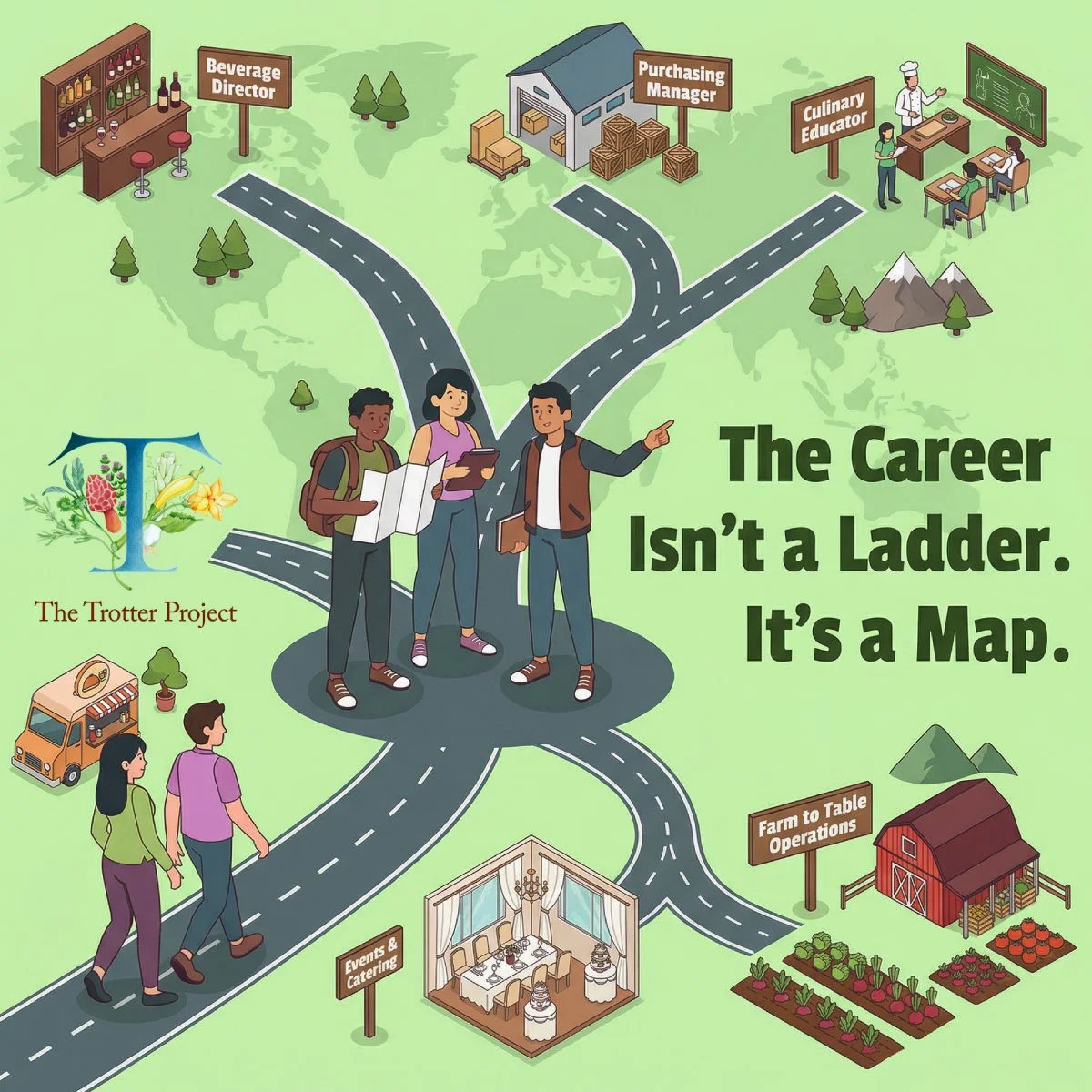
Here's something no one tells you early enough: in food and hospitality, "making it" doesn't mean becoming a head chef. It doesn't mean managing a hotel. It doesn't mean owning a restaurant by 35.
Culinary career paths are wider than most students are told. Making it means building a career that challenges you, sustains you, and still feels worth it ten years from now.
That looks different for everyone — and that's the point.
The Myth of the Straight Line
Most students enter culinary, hospitality, and food programs with a picture in their head. Chef. Manager. Owner. And those are real, meaningful destinations. But they're not the only ones — and treating them as the only measure of success sets a lot of talented people up for early burnout or quiet disappointment.
The food industry is one of the most diverse employment ecosystems in the world. Hospitality careers span everything from restaurants to resorts to corporate dining. Food industry careers reach into science, sourcing, policy, and entrepreneurship. The culinary career paths inside this world don't all go in the same direction, and they rarely go in a straight line.
Understanding that — really internalizing it — is one of the most useful things you can do for yourself right now.
What Career Growth Actually Looks Like
Moving Up: Vertical Growth
Vertical growth is what most people picture. Entry-level role → mid-level role → leadership role. In culinary, that might look like line cook → sous chef → executive chef. In hospitality, it might be front desk associate → assistant manager → general manager.
Vertical moves typically come with more responsibility, more visibility, and yes — more pay. They also come with new demands. Management isn't just doing your job better; it's a different job entirely. Think:
Scheduling and staffing decisions
Hiring, training, and sometimes letting people go
Budget conversations and cost accountability
Holding a team together on a chaotic Saturday night
That's worth knowing before you pursue it, not after. The skills that make someone a great cook or a great guest services agent are not automatically the skills that make someone a great leader. Leadership has to be learned, practiced, and honestly — wanted. Not everyone should manage people, and not everyone has to.
Moving Sideways: Lateral Growth
Lateral moves don't get enough credit. A lateral move means shifting into a different role — often at a similar level — to build new skills, change your environment, or discover a part of the industry you didn't know you'd love. It might look like:
A pastry cook who transitions into recipe development
A restaurant manager who moves into hotel food and beverage operations
A culinary student who discovers, mid-internship, that they're more interested in the purchasing side than the cooking side
These aren't detours. They're how people find their fit.
Lateral moves often lead to more interesting vertical moves later — because people who understand multiple sides of an operation tend to become exceptional leaders. Cross-functional experience isn't a gap in your résumé. It's a signal that you can see the whole picture.
Roles Worth Knowing About
The food industry is full of hospitality careers and food industry careers that students rarely encounter in the classroom. Here are a few worth putting on your radar.
Purchasing & Procurement Someone has to decide where the ingredients come from, negotiate with vendors, manage costs, and make sure supply chain decisions align with the kitchen's standards. Purchasing professionals in food and hospitality live at the intersection of relationships, quality, and financial discipline. For students who like strategy and sourcing more than service, this is a serious career path.
Beverage Management This is a specialized and growing field. Beverage directors and sommeliers curate wine programs, manage bar inventory, train staff on service and pairing, and often play a significant role in a restaurant's financial performance. Wine and spirits certifications can open doors here — but so can curiosity, palate development, and a genuine passion for the craft.
Catering & Events Operations Event-based food and hospitality is its own world. Catering coordinators, event managers, and banquet directors handle the logistics of feeding hundreds of people in high-pressure, non-repeatable environments. If you thrive under deadline pressure and love the energy of a big moment coming together, this deserves a look.
Food & Beverage Operations (Hotels, Resorts, Healthcare, Corporate Dining) Not all hospitality happens in restaurants. Hotels, resorts, hospitals, corporate campuses, universities, and stadiums all employ food and hospitality professionals — often with more structure, more predictable hours, and different kinds of advancement. These environments are sometimes more accessible for work-life balance, without sacrificing the career itself.
Culinary Education & Training Some of the most impactful people in this industry are the ones who teach it. Culinary educators, corporate trainers, and professional development specialists shape how the next generation of professionals learns their craft. If you find yourself naturally explaining things, mentoring peers, or thinking about how to make processes better — this direction might be worth considering.
Entrepreneurship Not starting a restaurant. Starting a business. The distinction matters. Food entrepreneurs build product lines, launch catering companies, develop private chef services, create food-focused content, consult for growing restaurants, and build brands around expertise they've spent years developing. Entrepreneurship in this industry rarely looks like the overnight success stories you see online — it usually looks like five years of careful work, strategic decisions, and knowing exactly who you're trying to serve.
Early Decisions That Shape Long Careers
You don't need to have it figured out right now. But there are a few things worth doing early that tend to pay off later.
Say yes to experiences that make you uncomfortable. The front-of-house student who spends a summer in purchasing. The pastry student who takes an elective in hospitality management. The food science student who picks up a catering gig on weekends. Discomfort is often where clarity lives.
Pay attention to what you actually enjoy. Not what sounds impressive. Not what a mentor or parent thinks you should do. Notice what makes hours feel like minutes, what problems you find interesting to solve, what kinds of days leave you tired in a good way. That information is useful.
Don't chase a title. Chase what the title requires of you. Before pursuing a leadership role, ask: Do I want the responsibility that comes with it? Before pursuing entrepreneurship, ask: Am I prepared for the uncertainty that comes with it? The role is only as good as the life it produces.
Build relationships across functions. The food and hospitality world is smaller than it looks, and reputation travels. Get to know the people in purchasing, events, operations, beverage. Attend trade events. Ask questions.
A Career Worth Building
There's no single culinary career path through this industry that guarantees fulfillment. But there are approaches that tend to lead somewhere meaningful: staying curious, remaining open to lateral movement, building skills across functions, and being honest with yourself about what kind of work actually energizes you.
The head chef role is a worthy goal if it's your goal. So is becoming a purchasing director, a beverage educator, a private caterer, an operations manager, or a food industry entrepreneur. So is a role that doesn't exist yet but that you'll help create.
The map of careers beyond the kitchen has more roads than the one most people see first.
Give yourself permission to explore it.